Buy bier.co.at ?
We are moving the project
bier.co.at .
Are you interested in purchasing the domain
bier.co.at ?
domain@kv-gmbh.de · 0541-91531010
Buy bier.co.at ?
What is proton donation and proton acceptance in chemistry?
Proton donation and proton acceptance are key concepts in acid-base chemistry. Proton donation refers to the transfer of a hydrogen ion (proton) from one substance to another. This typically occurs when an acid donates a proton to a base. Proton acceptance, on the other hand, involves the acceptance of a proton by a substance, often a base, leading to the formation of a new chemical species. These processes are fundamental to understanding the behavior of acids and bases in chemical reactions. **
What is meant by proton donors and proton acceptors?
Proton donors are substances that can donate a proton (H+) to another substance. This typically involves the release of a hydrogen ion. Proton acceptors, on the other hand, are substances that can accept a proton from another substance. This typically involves the uptake of a hydrogen ion. In the context of acid-base reactions, proton donors are acids, while proton acceptors are bases. **


Similar search terms for Proton
Top-Angebote
Products related to Proton:
-
Morris & Co Honeysuckle 2 Pint TeapotPerfect for adding a touch of style and heritage to your afternoon tea, this Morris & Co Honeysuckle 2 Pint Teapot has a 1.1L capacity. Featuring the heritage yet modish designs of William Morris, this giftware collection is the perfect complement to Morris and Co's 160th anniversary celebrations in 2021. Morris & Co Honeysuckle 2 Pint Teapot is dishwasher, freezer and microwave safe.60,80 £*Shipping: 0,00 £Secure redirect to the provider
-
Spode Morris & Co 3-Pint Earthenware Jug - FruitServe with effortless elegance using this Morris & Co. jug from Spode’s heritage-inspired collection. Showcasing the iconic Fruit design, originally created in 1864, it features richly detailed pomegranates, peaches, and flowing foliage in beautifully balanced tones. Perfect for pouring drinks or displaying fresh flowers as a striking centrepiece, this versatile piece brings timeless charm to any home. An exceptional choice to treasure yourself or present as a thoughtful housewarming or wedding gift. Product Features Fruit Design Crafted from high-quality earthenware Made in Stoke-on-Trent Ideal for serving drinks when entertaining Perfect for use as a flower jug Other products are available in this range Capacity: 1700ml / 3 Pints Dimensions: Height: 20cm x Depth: 10.5cm x Width: 22cm Dishwasher and microwave safe49,99 £*Shipping: 4,99 £Secure redirect to the provider
-
Dartington Beer Collection Real Ale TankardEnjoy a perfect pint in this delightful Dartington Lead Crystal Real Ale Tankard. Handmade in England from high quality crystal glass this Tankard has a capacity of 600ml and measures 142mm high. Suitable for hand washing.50,00 £*Shipping: 0,00 £Secure redirect to the provider
-
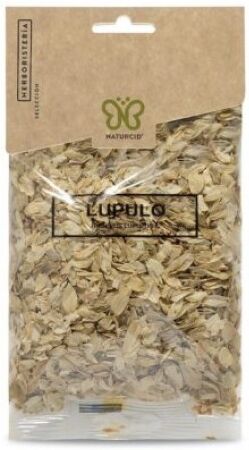
Naturcid Hops Infusion Bag 20 grNutrition and Supplements Natural Extracts Naturcid Hops Infusion Bag 20 gr It is a product with optimal natural resources recommended for anxiety, sleep disorders and restlessness, symptoms of menstruation, menopause and diseases of the digestive system. It has beneficial sedative, estrogenic and vermifuge properties. How to use: Infusion (boil for a few moments) 1 tablespoon per cup of water. Let stand a few minutes, strain and drink 2 cups a day. Avoid during pregnancy, lactation and children under 6 years of age. Do not take for long periods. Additional information: No allergens. Does not contain genetically modified organisms (No GMO) or irradiated. BPA free container. Store at room temperature, in a cool, dry place protected from light.1,34 £*Shipping: 3,99 £Secure redirect to the provider



-
What determines a proton donor and a proton acceptor?
A proton donor is a substance that can release a proton (H+) in a chemical reaction, while a proton acceptor is a substance that can accept a proton. This ability is determined by the presence of a hydrogen atom with a positive charge (H+) in the molecule. In general, substances with a lone pair of electrons, such as a hydroxide ion (OH-) or an amine group (NH2), can act as proton acceptors, while substances with a hydrogen atom bonded to an electronegative atom, such as a hydrochloric acid (HCl) or acetic acid (CH3COOH), can act as proton donors. **
-
Why are carboxylic acids proton donors and amines proton acceptors?
Carboxylic acids are proton donors because they contain a highly electronegative oxygen atom that can stabilize the resulting carboxylate anion by delocalizing the negative charge. Amines, on the other hand, are proton acceptors because they contain a lone pair of electrons on the nitrogen atom that can readily accept a proton to form a positively charged ammonium ion. This ability to donate or accept protons is due to the presence of functional groups in these molecules that can easily gain or lose a hydrogen ion in solution. **
-
Are there only proton-proton collisions in the particle accelerator?
No, there are not only proton-proton collisions in the particle accelerator. Particle accelerators can also collide protons with other particles such as electrons or heavy ions like lead or gold. These collisions are important for studying different aspects of particle physics and for exploring the fundamental forces and particles that make up the universe. By colliding different types of particles, scientists can gain a better understanding of the fundamental building blocks of matter and the forces that govern their interactions. **
-
How secure is Proton?
Proton is considered to be a highly secure email service. It offers end-to-end encryption for emails, meaning that only the sender and recipient can read the contents of the messages. Proton also uses strong encryption protocols to protect user data and has a strict privacy policy that ensures user information is not shared with third parties. Additionally, Proton is based in Switzerland, known for its strong privacy laws, adding an extra layer of security for users. **


What is proton decay?
Proton decay is a theoretical process in which a proton, one of the fundamental particles that make up an atom's nucleus, decays into lighter particles. This process is predicted by some grand unified theories (GUTs) that seek to unify the electromagnetic, weak, and strong nuclear forces. If proton decay were to occur, it would have profound implications for our understanding of the fundamental forces and particles in the universe. However, despite extensive experimental efforts, proton decay has not been observed, and its theoretical prediction remains unconfirmed. **
What are proton currents?
Proton currents refer to the flow of protons, which are positively charged particles, through a medium. This flow of protons can occur in various contexts, such as in biological systems, in proton-conducting materials, or in the context of proton exchange membrane fuel cells. Proton currents are important in many physiological processes, such as the generation of energy in cells through the process of oxidative phosphorylation. In the context of proton-conducting materials and fuel cells, proton currents are important for the generation of electrical energy. **
Top-Angebote
Products related to Proton:
-
Of Wheels Deals Geely Proton Ultra Bright LED Trunk Light Upgrade Geely Proton Ultra Bright LED Trunk Light UpgradeBring a brighter and more convenient driving experience to your vehicle with this premium LED trunk light designed for Geely EX2 and Proton e.MAS 5 models. This upgrade enhances trunk visibility while adding a stylish modern touch to your car...47,97 $*Shipping: 0,00 $Secure redirect to the provider
-
Morris & Co Honeysuckle 2 Pint TeapotPerfect for adding a touch of style and heritage to your afternoon tea, this Morris & Co Honeysuckle 2 Pint Teapot has a 1.1L capacity. Featuring the heritage yet modish designs of William Morris, this giftware collection is the perfect complement to Morris and Co's 160th anniversary celebrations in 2021. Morris & Co Honeysuckle 2 Pint Teapot is dishwasher, freezer and microwave safe.60,80 £*Shipping: 0,00 £Secure redirect to the provider
-
Spode Morris & Co 3-Pint Earthenware Jug - FruitServe with effortless elegance using this Morris & Co. jug from Spode’s heritage-inspired collection. Showcasing the iconic Fruit design, originally created in 1864, it features richly detailed pomegranates, peaches, and flowing foliage in beautifully balanced tones. Perfect for pouring drinks or displaying fresh flowers as a striking centrepiece, this versatile piece brings timeless charm to any home. An exceptional choice to treasure yourself or present as a thoughtful housewarming or wedding gift. Product Features Fruit Design Crafted from high-quality earthenware Made in Stoke-on-Trent Ideal for serving drinks when entertaining Perfect for use as a flower jug Other products are available in this range Capacity: 1700ml / 3 Pints Dimensions: Height: 20cm x Depth: 10.5cm x Width: 22cm Dishwasher and microwave safe49,99 £*Shipping: 4,99 £Secure redirect to the provider
-
What is proton donation and proton acceptance in chemistry?
Proton donation and proton acceptance are key concepts in acid-base chemistry. Proton donation refers to the transfer of a hydrogen ion (proton) from one substance to another. This typically occurs when an acid donates a proton to a base. Proton acceptance, on the other hand, involves the acceptance of a proton by a substance, often a base, leading to the formation of a new chemical species. These processes are fundamental to understanding the behavior of acids and bases in chemical reactions. **
-
What is meant by proton donors and proton acceptors?
Proton donors are substances that can donate a proton (H+) to another substance. This typically involves the release of a hydrogen ion. Proton acceptors, on the other hand, are substances that can accept a proton from another substance. This typically involves the uptake of a hydrogen ion. In the context of acid-base reactions, proton donors are acids, while proton acceptors are bases. **
-
What determines a proton donor and a proton acceptor?
A proton donor is a substance that can release a proton (H+) in a chemical reaction, while a proton acceptor is a substance that can accept a proton. This ability is determined by the presence of a hydrogen atom with a positive charge (H+) in the molecule. In general, substances with a lone pair of electrons, such as a hydroxide ion (OH-) or an amine group (NH2), can act as proton acceptors, while substances with a hydrogen atom bonded to an electronegative atom, such as a hydrochloric acid (HCl) or acetic acid (CH3COOH), can act as proton donors. **
-
Why are carboxylic acids proton donors and amines proton acceptors?
Carboxylic acids are proton donors because they contain a highly electronegative oxygen atom that can stabilize the resulting carboxylate anion by delocalizing the negative charge. Amines, on the other hand, are proton acceptors because they contain a lone pair of electrons on the nitrogen atom that can readily accept a proton to form a positively charged ammonium ion. This ability to donate or accept protons is due to the presence of functional groups in these molecules that can easily gain or lose a hydrogen ion in solution. **
Similar search terms for Proton
-
Dartington Beer Collection Real Ale TankardEnjoy a perfect pint in this delightful Dartington Lead Crystal Real Ale Tankard. Handmade in England from high quality crystal glass this Tankard has a capacity of 600ml and measures 142mm high. Suitable for hand washing.50,00 £*Shipping: 0,00 £Secure redirect to the provider
-
Naturcid Hops Infusion Bag 20 grNutrition and Supplements Natural Extracts Naturcid Hops Infusion Bag 20 gr It is a product with optimal natural resources recommended for anxiety, sleep disorders and restlessness, symptoms of menstruation, menopause and diseases of the digestive system. It has beneficial sedative, estrogenic and vermifuge properties. How to use: Infusion (boil for a few moments) 1 tablespoon per cup of water. Let stand a few minutes, strain and drink 2 cups a day. Avoid during pregnancy, lactation and children under 6 years of age. Do not take for long periods. Additional information: No allergens. Does not contain genetically modified organisms (No GMO) or irradiated. BPA free container. Store at room temperature, in a cool, dry place protected from light.1,34 £*Shipping: 3,99 £Secure redirect to the provider
-
Neovital Health Microgranules hops 45 capsulesNutrition and Supplements Special supplements Neovital Health Microgranules hops 45 capsules Neo microgranules hops 45 capsules. Hops are used mainly in medicine as a sedative ( calm and regularizes nervous activity ) and somnolent ( induces sleep by acting directly on the hypothalamus or by general sedation of the body ) in cases of insomnia, headaches, nervousness. It is also used to whet the appetite and in case of difficult digestion depending on its virtues as digestive ( helps digestion by facilitating the activity of the stomach) and appetizer ( contains bitter principles that stimulate the appetite and prepare the series of digestive operations ). It is also said to have an anaphrodisiac action, that is, it reduces sexual appetite in men. In women it seems to have been used to obtain the opposite effect. How to use : Take 2 capsules a day, in the morning and at night. Presentation: Package with 45 capsules of 400 mg. of microgranules.11,89 £*Shipping: 3,99 £Secure redirect to the provider
-
Raw Naturals Pale Ale Shower Gel 300mlThis mild and refreshing shower brew takes your shower experience to the next level. The formula transforms into an airy lather and rinses off smoothly, leaving your body and hair thoroughly cleansed, and perfumed to perfection. Key ingredients Mild natural cleansing agents from apple: cleanses deeply. Extracts from hops: caring, calming, and hydrating. Ingredients Aqua, Sodium Lauroyl Methyl Isethionate, Cocamidopropyl Betaine, Glycerin, Sodium Cocoyl Apple Amino Acids, Sodium Chloride, PEG-200 Hydrogenated Glyceryl Palmate, PEG-7 Glyceryl Cocoate, Parfum, Sodium Benzoate, Hydroxypropyl Guar Hydroxypropyltrimonium Chloride, Potassium Sorbate, Citric Acid, Hexylene Glycol, Humulus Lupulus Extract12,99 £*Shipping: 2,95 £Secure redirect to the provider
-
Are there only proton-proton collisions in the particle accelerator?
No, there are not only proton-proton collisions in the particle accelerator. Particle accelerators can also collide protons with other particles such as electrons or heavy ions like lead or gold. These collisions are important for studying different aspects of particle physics and for exploring the fundamental forces and particles that make up the universe. By colliding different types of particles, scientists can gain a better understanding of the fundamental building blocks of matter and the forces that govern their interactions. **
-
How secure is Proton?
Proton is considered to be a highly secure email service. It offers end-to-end encryption for emails, meaning that only the sender and recipient can read the contents of the messages. Proton also uses strong encryption protocols to protect user data and has a strict privacy policy that ensures user information is not shared with third parties. Additionally, Proton is based in Switzerland, known for its strong privacy laws, adding an extra layer of security for users. **
-
What is proton decay?
Proton decay is a theoretical process in which a proton, one of the fundamental particles that make up an atom's nucleus, decays into lighter particles. This process is predicted by some grand unified theories (GUTs) that seek to unify the electromagnetic, weak, and strong nuclear forces. If proton decay were to occur, it would have profound implications for our understanding of the fundamental forces and particles in the universe. However, despite extensive experimental efforts, proton decay has not been observed, and its theoretical prediction remains unconfirmed. **
-
What are proton currents?
Proton currents refer to the flow of protons, which are positively charged particles, through a medium. This flow of protons can occur in various contexts, such as in biological systems, in proton-conducting materials, or in the context of proton exchange membrane fuel cells. Proton currents are important in many physiological processes, such as the generation of energy in cells through the process of oxidative phosphorylation. In the context of proton-conducting materials and fuel cells, proton currents are important for the generation of electrical energy. **
* All prices are inclusive of VAT and, if applicable, plus shipping costs. The offer information is based on the details provided by the respective shop and is updated through automated processes. Real-time updates do not occur, so deviations can occur in individual cases. ** Note: Parts of this content were created by AI.