Buy bier.co.at ?
We are moving the project
bier.co.at .
Are you interested in purchasing the domain
bier.co.at ?
domain@kv-gmbh.de · 0541-91531010
Buy bier.co.at ?
What are river variables and potential variables?
River variables are physical, chemical, and biological characteristics of a river that can be measured and monitored to assess its health and quality. These variables include parameters such as water temperature, pH levels, dissolved oxygen, nutrient concentrations, and the presence of pollutants. Potential variables are factors that can influence or impact the river variables, such as land use practices, urban development, agricultural runoff, and climate change. Understanding both river variables and potential variables is essential for effective river management and conservation efforts. **
What is the difference between primitive variables and reference variables?
Primitive variables store the actual value, such as numbers or characters, directly in memory. Reference variables, on the other hand, store a reference to an object in memory rather than the actual value. This means that when working with reference variables, you are actually working with the object that the reference points to, while with primitive variables, you are working directly with the value stored in memory. Additionally, primitive variables are allocated on the stack, while reference variables are allocated on the heap. **

Similar search terms for Variables
Top-Angebote
Products related to Variables:
-
Spode Morris & Co 3-Pint Earthenware Jug - FruitServe with effortless elegance using this Morris & Co. jug from Spode’s heritage-inspired collection. Showcasing the iconic Fruit design, originally created in 1864, it features richly detailed pomegranates, peaches, and flowing foliage in beautifully balanced tones. Perfect for pouring drinks or displaying fresh flowers as a striking centrepiece, this versatile piece brings timeless charm to any home. An exceptional choice to treasure yourself or present as a thoughtful housewarming or wedding gift. Product Features Fruit Design Crafted from high-quality earthenware Made in Stoke-on-Trent Ideal for serving drinks when entertaining Perfect for use as a flower jug Other products are available in this range Capacity: 1700ml / 3 Pints Dimensions: Height: 20cm x Depth: 10.5cm x Width: 22cm Dishwasher and microwave safe49,99 £*Shipping: 4,99 £Secure redirect to the provider
-
Dartington Beer Collection Real Ale TankardEnjoy a perfect pint in this delightful Dartington Lead Crystal Real Ale Tankard. Handmade in England from high quality crystal glass this Tankard has a capacity of 600ml and measures 142mm high. Suitable for hand washing.50,00 £*Shipping: 0,00 £Secure redirect to the provider
-
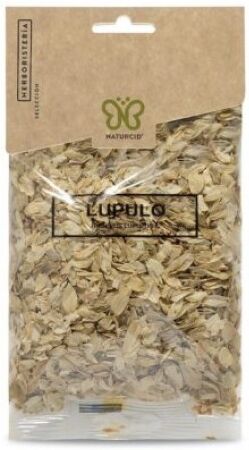
Naturcid Hops Infusion Bag 20 grNutrition and Supplements Natural Extracts Naturcid Hops Infusion Bag 20 gr It is a product with optimal natural resources recommended for anxiety, sleep disorders and restlessness, symptoms of menstruation, menopause and diseases of the digestive system. It has beneficial sedative, estrogenic and vermifuge properties. How to use: Infusion (boil for a few moments) 1 tablespoon per cup of water. Let stand a few minutes, strain and drink 2 cups a day. Avoid during pregnancy, lactation and children under 6 years of age. Do not take for long periods. Additional information: No allergens. Does not contain genetically modified organisms (No GMO) or irradiated. BPA free container. Store at room temperature, in a cool, dry place protected from light.1,34 £*Shipping: 3,99 £Secure redirect to the provider
-
Raw Naturals Pale Ale Shower Gel 300mlThis mild and refreshing shower brew takes your shower experience to the next level. The formula transforms into an airy lather and rinses off smoothly, leaving your body and hair thoroughly cleansed, and perfumed to perfection. Key ingredients Mild natural cleansing agents from apple: cleanses deeply. Extracts from hops: caring, calming, and hydrating. Ingredients Aqua, Sodium Lauroyl Methyl Isethionate, Cocamidopropyl Betaine, Glycerin, Sodium Cocoyl Apple Amino Acids, Sodium Chloride, PEG-200 Hydrogenated Glyceryl Palmate, PEG-7 Glyceryl Cocoate, Parfum, Sodium Benzoate, Hydroxypropyl Guar Hydroxypropyltrimonium Chloride, Potassium Sorbate, Citric Acid, Hexylene Glycol, Humulus Lupulus Extract12,99 £*Shipping: 2,95 £Secure redirect to the provider



-
What is the difference between ordinal scaled variables and ordinal variables?
Ordinal scaled variables are variables that have a specific order or ranking, but the intervals between the values are not necessarily equal. On the other hand, ordinal variables are variables that have categories with a natural order, but the numerical values assigned to them do not have any meaningful interpretation. In summary, ordinal scaled variables have meaningful numerical values with a specific order, while ordinal variables have categories with a natural order but lack meaningful numerical values. **
-
What are random variables?
Random variables are variables that can take on different values based on the outcome of a random event. They represent the possible outcomes of a random process and are used in probability theory and statistics to quantify uncertainty. Random variables can be discrete, taking on a finite number of values, or continuous, taking on any value within a range. They are essential for modeling and analyzing uncertain situations in various fields such as finance, engineering, and biology. **
-
What are reduced variables?
Reduced variables are a set of transformed variables that are used to simplify the analysis of a system or process. These variables are often obtained by scaling or normalizing the original variables to make them more manageable and easier to interpret. By using reduced variables, complex systems can be analyzed and understood more effectively, leading to better insights and decision-making. **
-
How do I solve an equation with form variables and solution variables?
To solve an equation with form variables and solution variables, you first need to isolate the solution variable on one side of the equation. This involves performing the necessary operations (addition, subtraction, multiplication, division) to move all other variables to the other side of the equation. Once you have isolated the solution variable, you can then solve for it by performing any additional operations needed to simplify the equation. Finally, you can substitute the solution back into the original equation to verify that it satisfies the equation. **


What is a local variable and what is the difference to instance variables, class variables, and normal variables in Java?
A local variable in Java is a variable that is declared within a method, constructor, or block of code and is only accessible within that specific scope. It is temporary and exists only for the duration of the method execution. The main difference between local variables, instance variables, class variables, and normal variables in Java is their scope and lifetime. Instance variables are declared within a class but outside of any method and are accessible to all methods within the class. Class variables are declared with the static keyword and are shared among all instances of a class. Normal variables refer to any variable that is not a local, instance, or class variable. **
How can I pass variables?
To pass variables in programming, you can use parameters in functions or methods. When calling a function, you can pass variables as arguments to the function. Another way to pass variables is by using global variables, but this is generally not recommended as it can lead to code that is harder to maintain and debug. It is best practice to pass variables as parameters to functions or methods to ensure better code organization and reusability. **
Top-Angebote
Products related to Variables:
-
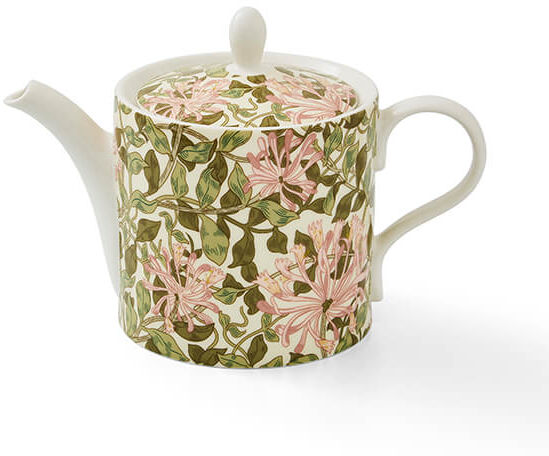
Morris & Co Honeysuckle 2 Pint TeapotPerfect for adding a touch of style and heritage to your afternoon tea, this Morris & Co Honeysuckle 2 Pint Teapot has a 1.1L capacity. Featuring the heritage yet modish designs of William Morris, this giftware collection is the perfect complement to Morris and Co's 160th anniversary celebrations in 2021. Morris & Co Honeysuckle 2 Pint Teapot is dishwasher, freezer and microwave safe.60,80 £*Shipping: 0,00 £Secure redirect to the provider
-
Spode Morris & Co 3-Pint Earthenware Jug - FruitServe with effortless elegance using this Morris & Co. jug from Spode’s heritage-inspired collection. Showcasing the iconic Fruit design, originally created in 1864, it features richly detailed pomegranates, peaches, and flowing foliage in beautifully balanced tones. Perfect for pouring drinks or displaying fresh flowers as a striking centrepiece, this versatile piece brings timeless charm to any home. An exceptional choice to treasure yourself or present as a thoughtful housewarming or wedding gift. Product Features Fruit Design Crafted from high-quality earthenware Made in Stoke-on-Trent Ideal for serving drinks when entertaining Perfect for use as a flower jug Other products are available in this range Capacity: 1700ml / 3 Pints Dimensions: Height: 20cm x Depth: 10.5cm x Width: 22cm Dishwasher and microwave safe49,99 £*Shipping: 4,99 £Secure redirect to the provider
-
Dartington Beer Collection Real Ale TankardEnjoy a perfect pint in this delightful Dartington Lead Crystal Real Ale Tankard. Handmade in England from high quality crystal glass this Tankard has a capacity of 600ml and measures 142mm high. Suitable for hand washing.50,00 £*Shipping: 0,00 £Secure redirect to the provider
-
What are river variables and potential variables?
River variables are physical, chemical, and biological characteristics of a river that can be measured and monitored to assess its health and quality. These variables include parameters such as water temperature, pH levels, dissolved oxygen, nutrient concentrations, and the presence of pollutants. Potential variables are factors that can influence or impact the river variables, such as land use practices, urban development, agricultural runoff, and climate change. Understanding both river variables and potential variables is essential for effective river management and conservation efforts. **
-
What is the difference between primitive variables and reference variables?
Primitive variables store the actual value, such as numbers or characters, directly in memory. Reference variables, on the other hand, store a reference to an object in memory rather than the actual value. This means that when working with reference variables, you are actually working with the object that the reference points to, while with primitive variables, you are working directly with the value stored in memory. Additionally, primitive variables are allocated on the stack, while reference variables are allocated on the heap. **
-
What is the difference between ordinal scaled variables and ordinal variables?
Ordinal scaled variables are variables that have a specific order or ranking, but the intervals between the values are not necessarily equal. On the other hand, ordinal variables are variables that have categories with a natural order, but the numerical values assigned to them do not have any meaningful interpretation. In summary, ordinal scaled variables have meaningful numerical values with a specific order, while ordinal variables have categories with a natural order but lack meaningful numerical values. **
-
What are random variables?
Random variables are variables that can take on different values based on the outcome of a random event. They represent the possible outcomes of a random process and are used in probability theory and statistics to quantify uncertainty. Random variables can be discrete, taking on a finite number of values, or continuous, taking on any value within a range. They are essential for modeling and analyzing uncertain situations in various fields such as finance, engineering, and biology. **
Similar search terms for Variables
-
Naturcid Hops Infusion Bag 20 grNutrition and Supplements Natural Extracts Naturcid Hops Infusion Bag 20 gr It is a product with optimal natural resources recommended for anxiety, sleep disorders and restlessness, symptoms of menstruation, menopause and diseases of the digestive system. It has beneficial sedative, estrogenic and vermifuge properties. How to use: Infusion (boil for a few moments) 1 tablespoon per cup of water. Let stand a few minutes, strain and drink 2 cups a day. Avoid during pregnancy, lactation and children under 6 years of age. Do not take for long periods. Additional information: No allergens. Does not contain genetically modified organisms (No GMO) or irradiated. BPA free container. Store at room temperature, in a cool, dry place protected from light.1,34 £*Shipping: 3,99 £Secure redirect to the provider
-
Raw Naturals Pale Ale Shower Gel 300mlThis mild and refreshing shower brew takes your shower experience to the next level. The formula transforms into an airy lather and rinses off smoothly, leaving your body and hair thoroughly cleansed, and perfumed to perfection. Key ingredients Mild natural cleansing agents from apple: cleanses deeply. Extracts from hops: caring, calming, and hydrating. Ingredients Aqua, Sodium Lauroyl Methyl Isethionate, Cocamidopropyl Betaine, Glycerin, Sodium Cocoyl Apple Amino Acids, Sodium Chloride, PEG-200 Hydrogenated Glyceryl Palmate, PEG-7 Glyceryl Cocoate, Parfum, Sodium Benzoate, Hydroxypropyl Guar Hydroxypropyltrimonium Chloride, Potassium Sorbate, Citric Acid, Hexylene Glycol, Humulus Lupulus Extract12,99 £*Shipping: 2,95 £Secure redirect to the provider
-
KitchenCraft Kitchen Craft Set Of 4 Terrazzo Floral Barrel MugsThis set of 4 KitchenCraft terrazzo floral barrel mugs are perfect for tea, coffee or even a hot chocolate. Made from china and with a 425ml capacity, each barrel-shaped mug features a mixture of floral and patterned designs and has an ample handle for a comfortable grip. This KitchenCraft set of 4 mugs are both microwave and dishwasher safe and are part of a large collection of mugs in various designs.25,59 £*Shipping: 3,50 £Secure redirect to the provider
-
What are reduced variables?
Reduced variables are a set of transformed variables that are used to simplify the analysis of a system or process. These variables are often obtained by scaling or normalizing the original variables to make them more manageable and easier to interpret. By using reduced variables, complex systems can be analyzed and understood more effectively, leading to better insights and decision-making. **
-
How do I solve an equation with form variables and solution variables?
To solve an equation with form variables and solution variables, you first need to isolate the solution variable on one side of the equation. This involves performing the necessary operations (addition, subtraction, multiplication, division) to move all other variables to the other side of the equation. Once you have isolated the solution variable, you can then solve for it by performing any additional operations needed to simplify the equation. Finally, you can substitute the solution back into the original equation to verify that it satisfies the equation. **
-
What is a local variable and what is the difference to instance variables, class variables, and normal variables in Java?
A local variable in Java is a variable that is declared within a method, constructor, or block of code and is only accessible within that specific scope. It is temporary and exists only for the duration of the method execution. The main difference between local variables, instance variables, class variables, and normal variables in Java is their scope and lifetime. Instance variables are declared within a class but outside of any method and are accessible to all methods within the class. Class variables are declared with the static keyword and are shared among all instances of a class. Normal variables refer to any variable that is not a local, instance, or class variable. **
-
How can I pass variables?
To pass variables in programming, you can use parameters in functions or methods. When calling a function, you can pass variables as arguments to the function. Another way to pass variables is by using global variables, but this is generally not recommended as it can lead to code that is harder to maintain and debug. It is best practice to pass variables as parameters to functions or methods to ensure better code organization and reusability. **
* All prices are inclusive of VAT and, if applicable, plus shipping costs. The offer information is based on the details provided by the respective shop and is updated through automated processes. Real-time updates do not occur, so deviations can occur in individual cases. ** Note: Parts of this content were created by AI.